Starcrossed
- 4.8
- Rating
- 50.00K
- Installs
- Free
- Price

 Analysis by App-foxy
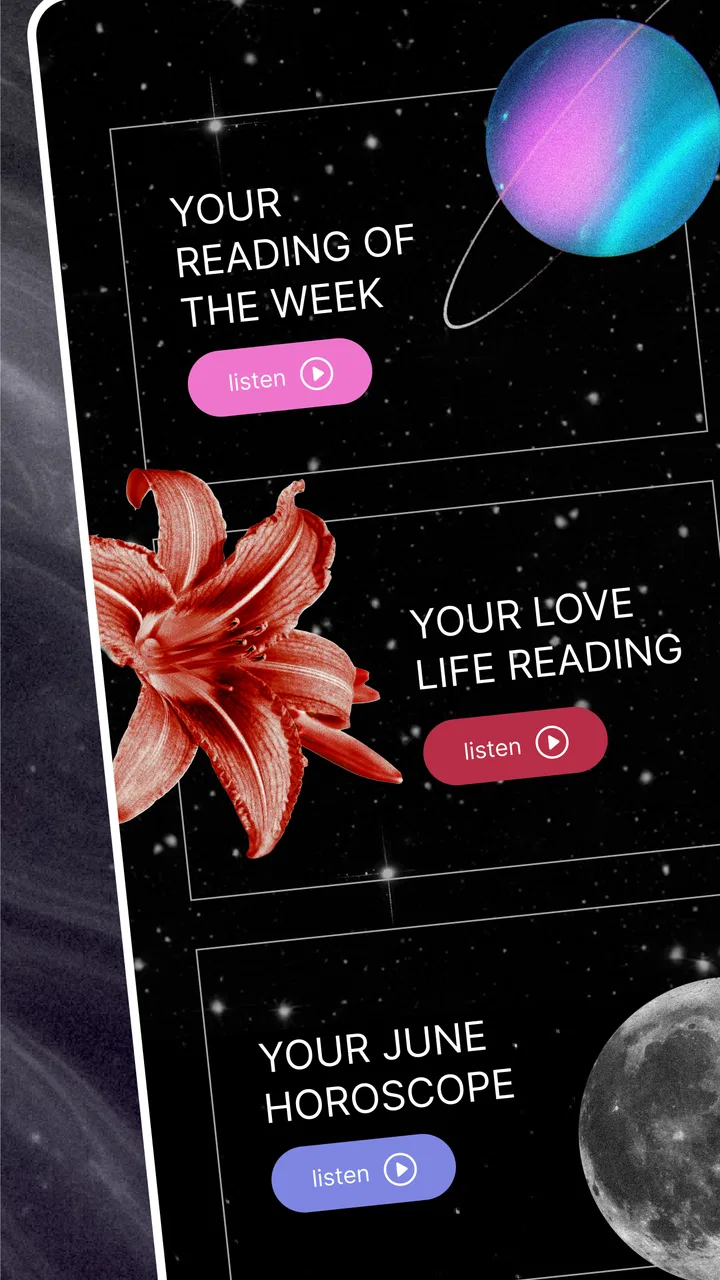
I approached Starcrossed as a practical lifestyle app rather than something to open once, read a horoscope, and forget. Its focus is personal astrology: a birth chart, daily transits, and compatibility tools gathered in one place. In my experience, that makes it most interesting for people who enjoy returning to the same chart over time and comparing what they notice in daily life with the app’s astrological view.
The app is free to start, is suitable for Everyone, and comes from Starcrossed. It has already attracted a 4.8 average from around 2.8 thousand ratings, with more than 50 thousand installs. Those figures suggest a healthy early audience, although I would still treat the app as a personal reflection tool rather than a source of objective guidance. The most useful question is not whether astrology is “right,” but whether the way this app presents it helps you think, plan, and communicate.
How Starcrossed feels in everyday use
The first thing I noticed is that the app’s value depends heavily on the quality of your starting information. A birth chart is not like a generic daily message that works equally well for everyone. It is meant to be personal, so taking time to enter your details carefully matters. If you rush through setup or use approximate information, you may end up judging the app’s interpretations when the real problem is the foundation of the chart.
You May Also Like

 AccuWeather: Weather Radar
AccuWeather Review: A Quick, Clear Forecast for Everyday Decisions
For everyday plans, the best forecast is the one you can understand quickly. AccuWeather makes rain timing, radar, and local conditions easy to act on, with a few trade-offs.

 Hill Climb Racing
Why Hill Climb Racing Still Turns Crashes Into One More Run
A tiny car, a bumpy hill and one more upgrade: Hill Climb Racing keeps resurfacing because its simple chaos makes every near-miss feel personal.

 AliExpress - Shopping App
AliExpress Makes Global Shopping Feel Personal, but Shoppers Bear the Risk
AliExpress turns a global marketplace into a pocket-sized discovery engine. Its reach is useful, its shopping loop compelling, and its trade-offs easy to miss.

 Lords Mobile: Kingdom Wars
Lords Mobile Is a Kingdom-Building Routine, Not a Quick Match
A case-by-case verdict on the building, battles, device demands, and social commitments that make Lords Mobile rewarding for some players and exhausting for others.

 PDF Scanner app - TapScanner
TapScanner Makes Paperwork Easier to Capture, Check, and Share
TapScanner makes scanning with a phone feel less like a rescue operation and more like a dependable step in getting work done. Its capture tools are useful, though not flawless.

 Block Blast!
 Shows How Much a Puzzle Game Can Leave Out
A quiet grid game shows why puzzle players increasingly value instant clarity, repeatable skill and low-pressure play—and where the genre still needs to catch up.
More From Our News Desk
View All News


Once that initial step is handled, the experience is easier to understand. The birth chart gives you a fixed reference point, while daily transits provide a changing layer to revisit. Compatibility adds another reason to return, especially if you like exploring how two people’s charts interact rather than relying on a simple sign-to-sign comparison. I found that combination more useful than an app offering only a daily horoscope because it gives me several levels of context.
The interface is best approached in short sessions. I would open it in the morning, check the current transit view, and then leave rather than trying to consume every interpretation in one sitting. That habit keeps the app from becoming overwhelming and makes it easier to remember one or two ideas during the day. The information feels more manageable when I treat it as a prompt for reflection instead of a checklist of predictions.
For example, imagine checking the app before a difficult conversation at work. I would not use it to decide whether to speak or stay silent. Instead, I might use the transit section to choose a question for myself: am I reacting quickly, avoiding a necessary topic, or giving the other person enough room? That is a realistic strength of this kind of tool. It can create a pause before an ordinary decision, even when the user treats the astrology symbolically.
Speed expectations and the shape of a normal session
Starcrossed is not the kind of app where speed is measured by constant animation or rapid content feeds. Its main performance test is whether I can move from the opening screen to the chart, transit information, or compatibility area without feeling lost. For normal, occasional use, I would expect the experience to feel lighter than a social network or a media-heavy lifestyle platform because the core activity is reading and navigating personal information.
That said, a chart-based app can feel slower during its first meaningful setup than during later visits. There is more to enter, interpret, and understand than in a generic horoscope app. I would not mistake that learning curve for poor performance. The better test is whether the app remains clear once the initial curiosity wears off. In my view, Starcrossed benefits when you give it a few focused sessions instead of trying to understand every part immediately.
The current version is 1.0.40, and the app was released on December 30, 2024. That places it in a relatively early stage compared with long-established astrology tools. An early product can feel pleasantly focused, but it may also have rough edges in navigation or explanation as its design evolves. I would keep expectations realistic: the app’s appeal is its concentrated set of astrology features, not the maturity of a decades-old reference library.
One practical tip is to avoid opening it only when you want an instant answer. If you record a short note about what you expected from a transit and revisit it later, the app becomes more useful as a personal journal prompt. You do not need a formal diary. A few words about your mood, a conversation, or a decision can help you separate genuinely helpful reflection from interpretations that simply sounded persuasive in the moment.
What happens during heavier use
Heavier use for this app means moving between the birth chart, daily transits, and compatibility rather than leaving a video or game running. The main strain is therefore likely to come from repeated loading, switching sections, or asking the app to present different chart relationships in one sitting. I would expect that to matter more on older or tightly constrained devices than on a recent phone, particularly if other apps are active at the same time.
I also found that heavy use can become mentally demanding before it becomes technically demanding. Astrology terminology can accumulate quickly. Looking at a chart, then jumping into current transits, then comparing another person’s chart may produce a lot of information without a clear takeaway. My advice is to choose one purpose per session: understand your own chart, review today’s transits, or explore compatibility. That simple limit improves the experience more than endlessly searching for another interpretation.
Compatibility is especially easy to overuse. It can be tempting to treat a favorable or difficult comparison as a verdict on a relationship. I would not do that. A better workflow is to use the section to identify a topic worth discussing, such as communication habits or different emotional rhythms, and then test that idea against real behavior. This is one of the app’s more valuable trade-offs: it can encourage thoughtful conversation, but only if the user keeps human choices at the center.
Another non-obvious limitation is that repeated checking can make ordinary events feel like evidence for whatever the app displayed earlier. I recommend checking once, noting the theme, and then living the day normally. That protects the app from becoming a source of anxiety and makes any later reflection more honest. It also reduces unnecessary screen time and keeps the experience from turning into a loop of searching for confirmation.
Reliability, continuity, and recovering from interruptions
For a lifestyle app like this, reliability is not only about avoiding crashes. It is also about whether I can return to the same personal context without having to reconstruct my intentions every time. A birth chart is valuable because it stays relevant, while daily transits naturally change. That distinction gives the app a useful rhythm: one part is stable enough to revisit, and another part provides a reason to check in again.
I would still use a cautious approach with anything I consider personally important. Astrology readings can influence mood, relationships, and decisions, so I would never let a temporary interpretation replace direct communication, professional advice, or practical planning. The Everyone age rating makes the app broadly approachable, but that does not mean every interpretation will feel equally suitable for every person. Younger users in particular may benefit from treating the content as reflective entertainment rather than instruction.
Recovery matters when an app is interrupted while I am reading. On a phone, it is common to switch to a message, answer a call, or let the screen lock. When returning, I want to be able to pick up the same thread without feeling that I have lost the purpose of the session. I cannot turn that into a guaranteed technical promise, but the app’s focused structure makes short, repeatable visits a sensible way to use it. I would avoid opening several interpretation areas at once if I knew I was likely to be interrupted.
The free entry point is another reliability consideration in the broader sense. You can try the experience without paying at the start, which lowers the risk of discovering that personal astrology is not for you. However, in-app purchases range from $6.99 to $107.99 per item. That is a wide span, so I would inspect each purchase carefully and decide what I actually need before spending. The free option is best treated as a trial of the app’s approach, not as a promise that every possible depth of use will remain free.
Device constraints and practical setup choices
Starcrossed supports Android devices running version 7.0 or later. That gives it a broad reach, including phones that are no longer new, but compatibility alone does not guarantee the same comfort on every device. Older hardware, limited storage, aggressive battery management, or a crowded background task list can all affect how pleasant any app feels. If the app seems sluggish, I would first close unused apps and check available space before deciding that the problem is the app itself.
Screen size can also change the experience. A larger display should make chart information and longer explanations easier to inspect, while a small phone may encourage more scrolling and repeated back-and-forth movement. That is not necessarily a defect, but it affects how much patience the app requires. I would use a larger screen when I wanted to study the chart carefully and a phone when I only wanted a quick transit check.
Battery demand is difficult to judge from the app’s purpose alone, and I would not expect a reading-focused astrology tool to behave like a navigation or video app. Still, repeated sessions, background activity, or frequent refreshing can matter on an older battery. My practical advice is simple: use it when you want to read, then close it rather than leaving it open all day. That keeps the app in its natural role and avoids turning a reflective tool into another constant notification habit.
Storage is unlikely to be the main reason to avoid it, but users with very limited space should still remember that every installed app competes for room with photos, messages, and updates. The more important constraint is attention. If you prefer quick, plain-language answers and do not want to learn chart concepts, a minimalist horoscope app may feel faster even if Starcrossed itself runs well. Performance is partly technical and partly about how much interpretation you are willing to process.
Where it beats familiar alternatives
The usual alternative is a simple daily horoscope service. Those apps are convenient: open the screen, read a short sign-based message, and move on. Starcrossed offers a more personal route by combining a birth chart with changing transits and compatibility. That makes it a better fit for someone who wants continuity and comparison rather than a fresh generic paragraph every morning.
Another alternative is a dedicated astrology reference app with a larger emphasis on technical chart study. That kind of product may suit users who want extensive terminology, detailed calculations, or a more academic presentation. Starcrossed seems more approachable for someone who wants to connect astrology with everyday reflection without turning every session into a research project. The trade-off is that a focused app may not satisfy an advanced user who expects a complete professional toolkit.
There is also the no-app alternative: talking with a friend, writing in a journal, or using a calendar to track moods and events. I would not dismiss those options. A journal is better for recording what actually happened, while Starcrossed supplies a symbolic framework before or during the day. Used together, they can be more honest than either one alone. I especially like the workflow of reading one transit, writing a neutral expectation, and reviewing the result later without changing the original note.
That comparison also explains who should skip this app. If you want evidence-based mental-health guidance, financial certainty, relationship verdicts, or a tool that makes decisions for you, this is not the right choice. If you dislike entering personal birth information or find astrological language frustrating, the app will probably feel like work. I would also skip it if you are looking for a highly social experience, since its appeal is centered on personal interpretation rather than public interaction.
Who will get the most from it
I think Starcrossed is strongest for curious beginners who want more than a sun-sign horoscope but do not want to begin with a dense specialist tool. It also suits people who already know the basics of astrology and want a convenient place to revisit their chart while checking current transits. Couples or friends may enjoy the compatibility area as a conversation starter, provided they use it to ask better questions instead of assigning blame.
A useful everyday routine would be to check the app on a quiet morning, choose one transit theme, and connect it to a practical intention. For example, if the theme makes you think about communication, your action could simply be to reread an important message before sending it. At night, you could write whether that intention changed anything. This turns the app from passive entertainment into a small experiment in self-awareness, without requiring you to accept every interpretation literally.
The app is also a reasonable low-risk introduction because it is free to begin. I would explore the core experience first, learn whether the language feels clear, and only then consider any optional purchase. The fact that the developer offers in-app items from $6.99 up to $107.99 means restraint is important. A user who enjoys the free experience may still decide that paying adds enough value, but that decision should follow actual use rather than curiosity at the checkout screen.
My performance verdict
After using Starcrossed as a focused lifestyle companion, I see its performance strength in its manageable scope. It is built around personal chart information, daily transits, and compatibility, so it does not need to behave like a demanding entertainment app to be useful. Short sessions, a stable personal reference, and deliberate returns make more sense here than constant browsing. On a compatible Android phone, I would expect the app to be most comfortable when used with that rhythm.
Its main friction is not something I would solve by demanding more speed. The bigger challenge is interpretation: understanding what you are looking at, avoiding overchecking, and keeping the readings in proportion to real life. The early version status also makes me more forgiving of occasional roughness while reminding me not to assume it has every refinement of a mature astrology platform.
My recommendation is therefore fairly specific. Try it if you want a personal birth-chart experience with daily context and a way to explore compatibility, especially if you enjoy journaling or reflective routines. Start slowly, keep notes, and treat paid options as optional rather than necessary. Choose a simpler horoscope app if you want instant, lightweight entertainment, or a more specialized astrology tool if you need advanced technical depth.
Starcrossed works best when it helps you pause, notice patterns, and ask better questions—not when it is asked to make choices for you. With that expectation, it offers a thoughtful and accessible way to bring astrology into an ordinary day, while its free starting point gives most curious users enough room to decide whether the approach genuinely fits them.
FAQs for Starcrossed
01What is Starcrossed, and what kind of experience does it offer?
Starcrossed is a story-focused mobile game centered on romance, character relationships, and dramatic choices. Players follow an interactive narrative in which conversations, decisions, and personal connections influence how events unfold. The appeal comes from discovering different character routes and endings rather than from fast-paced action, so it is best suited to players who enjoy visual novels, emotional storytelling, and choice-driven gameplay.
02Is Starcrossed free to download, and does it include in-app purchases?
Starcrossed may be available to download without an upfront charge, but the exact pricing model can depend on the platform and version you install. Some story chapters, premium choices, bonus scenes, or other content may require payment. Before downloading, check the current Google Play Store or App Store listing for details about optional purchases, advertisements, subscriptions, and whether the complete experience is unlocked from the beginning.
03Does Starcrossed require an internet connection to play?
An internet connection may be needed when first downloading the game, verifying the application, loading additional story resources, or accessing optional online features. After the required files are installed, some parts of the main story may work offline, although this can vary by device and version. For the most reliable experience, launch the game online first and allow all available content to finish downloading.
04Is Starcrossed suitable for all ages?
Starcrossed is primarily aimed at older teenagers and adults because its story may include romance, emotional conflict, mature themes, or situations that are not designed for young children. The appropriate age rating can differ between Android and iOS, so parents should review the store classification and the game’s content description before allowing access. Players should also check whether dialogue or themes match their personal preferences.
05What devices are compatible with Starcrossed?
Compatibility depends on the specific Android or iOS version of Starcrossed, as well as the operating system, available storage, and device performance. Older phones may experience slower loading, reduced visual quality, or occasional crashes if the game is demanding. Before installing, open the official store page and verify the listed requirements, available storage space, and supported operating-system version for your particular device.
Pros
- Beautiful hand-drawn art gives each scene a distinctive visual identity.
- Choices create a personal romance story with meaningful emotional consequences.
- The short format makes it easy to complete a chapter in one sitting.
- The soundtrack complements the game’s reflective
- romantic atmosphere.
- The inclusive cast makes the story feel welcoming to more players.
Cons
- Some scenes move slowly
- especially when dialogue choices offer little variation.
- The story may feel too brief for players expecting a long visual novel.
- Romance routes can be less flexible than the branching presentation suggests.
- Replay value is limited once the main choices and endings are discovered.
- Certain emotional moments may feel predictable to experienced visual-novel fans.

Starcrossed
Gallery